
The South · Monroeville, Alabama
Monroeville and the courthouse in the novel
Harper Lee grew up in a small south Alabama town that readers know as Maycomb. The old courthouse is a museum now; the novel's town is fiction, and worth separating from the real one.
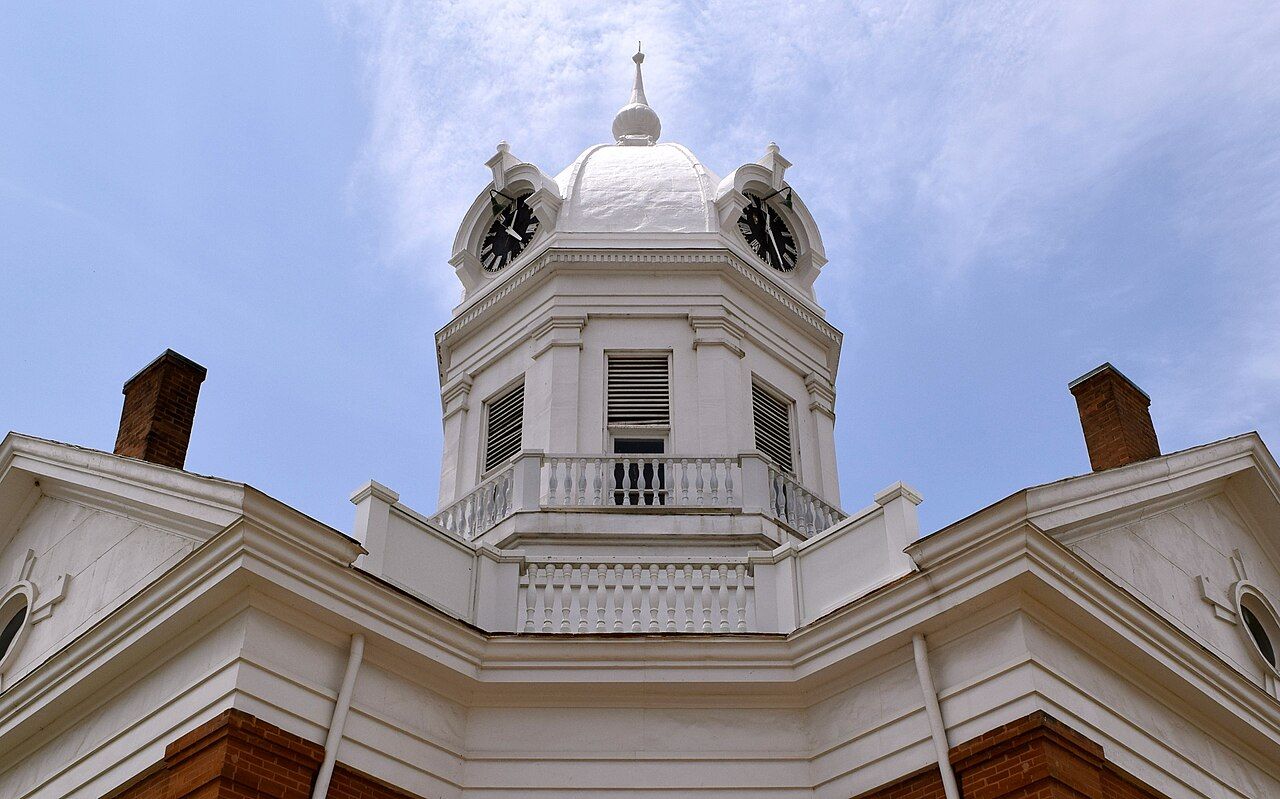
Monroeville is a small county seat in the pine country of south Alabama, between Mobile and Montgomery and some way off the interstate. Harper Lee was born here in 1926, grew up here and came back to live here at the end of her life; she died in Monroeville in 2016. Her childhood friend Truman Capote spent several of his early years next door. To Kill a Mockingbird, published in 1960, made the town famous as the model for Maycomb, and the old courthouse at its centre has become a museum to both writers.
A town and its fictional twin
It helps to arrive knowing what is real and what is not. Maycomb is an invented town, and the Finch family, the Radley house and the trial of Tom Robinson are fiction. Lee drew on her own childhood in the 1930s, on her father, Amasa Coleman Lee, a lawyer, newspaper editor and state legislator, and on the town around her, but she rearranged all of it. Her own childhood home is gone; so is the house next door where Capote stayed with his relatives, now marked only by a historical marker and the remains of a stone wall.
What is real is the shape of the place: a courthouse square, small shops, churches, shaded streets of frame houses, and a strict colour line that ran through every part of public life. The novel is set in that segregated South, and the town was segregated when Lee wrote it.
The Old Courthouse
The Old Monroe County Courthouse was built in 1903 and 1904, a red-brick building with a white cupola and clock faces on each side. It served as the county courthouse until a new one opened in 1963. Today it houses the town's heritage museum, with rooms on Lee and on Capote, their childhoods, their friendship and their books.
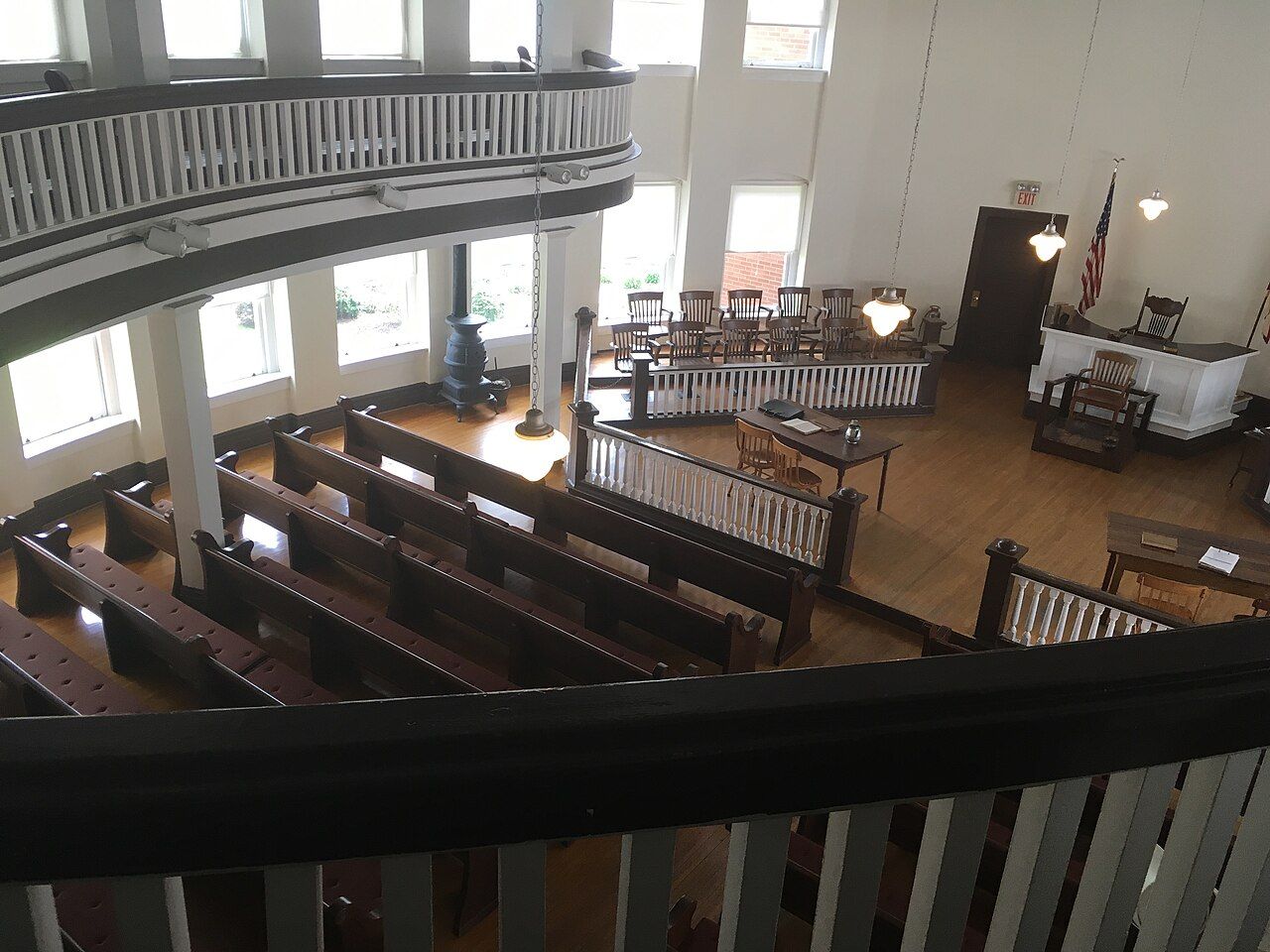
The courtroom upstairs is the reason most people come. It has been restored with its wooden pews, rail, jury box and judge's bench, and a balcony runs around three sides. When the novel was filmed in 1962, the production built a copy of this courtroom on a Hollywood sound stage rather than filming here, which is why it may look familiar. In Lee's novel the Black townspeople watch the trial from the balcony, and in the real courthouse, as in others across the segregated South, that was where Black spectators were made to sit. Stand up there for a few minutes before you go down, and look at the room the way the novel asks you to, from above and from the side.
Shelved nearby · NE 028Literary New York on footHarper Lee and Truman Capote
Lee and Capote met as children; he was sent to live with relatives in Monroeville, and the two played together, read together and wrote stories on an old typewriter. She modelled the character Dill in To Kill a Mockingbird on him. Capote's story A Christmas Memory draws on his childhood with an elderly cousin in the same house. Years later, in 1959, Lee went with him to Kansas and helped with the research for In Cold Blood.
To Kill a Mockingbird won the Pulitzer Prize in 1961 and has never been out of print. Lee published nothing else for more than fifty years, until Go Set a Watchman, an earlier draft set when Scout is grown, appeared in 2015. She lived quietly, avoided publicity and was a familiar figure in town for most of her life. Visitors should respect the same quiet: the people who knew her still live here, and her family's houses are private.
What the novel leaves out, and what it doesn't
Readers often look for the real trial behind the book. There is no single one. Early in his legal career, Lee's father defended two Black men, a father and son, charged with murder; they were convicted and hanged, and he is said never to have taken another criminal case. The Scottsboro trials of the 1930s, in which nine Black teenagers were falsely accused in northern Alabama, are often cited as a wider background. The novel is about a town's injustice seen through a white child's eyes, and in recent decades readers have also asked what it leaves out of the lives of its Black characters. The museum's exhibits touch on both.
Visiting
Plan on two to three hours for the courthouse and a walk around the square. Read the historical markers on the courthouse lawn, and walk a block or two off the square to see the older frame houses on the shaded side streets, which are closer to the town of the novel than anything on the square. Murals and sculptures around town pick out scenes from the novel. Each spring local players stage a version of the novel in the courthouse and on its lawn, with the jury chosen from the audience; tickets go fast, so check dates early and treat the season as usually spring. Monroeville fits on a southern route with Faulkner's Oxford, about five hours northwest, and Flannery O'Connor's Savannah to the east. If you time the trip around one of the book festivals of the region, so much the better.
Pictures on loan from
- Myartsylens100 CC BY-SA 4.0
- Redditaddict69 CC BY-SA 4.0