
New England and New York · New York
Literary New York on foot
Four walks through a city that has housed more American writers than any other: the great library on Fifth Avenue, Greenwich Village, Harlem's Schomburg Center and the Brooklyn Heights waterfront.
New York has been the centre of American publishing for most of two centuries, and nearly every American writer has lived, worked or starved here for a while. That makes a literary walk here a matter of choosing. This one takes four parts of the city, each a few subway stops from the next: the great library on Fifth Avenue, the streets of Greenwich Village, the Schomburg Center in Harlem and the brownstones and waterfront of Brooklyn Heights. Each makes a half-day on foot, and together they make a good long weekend.
Leave the car outside the city if you are on a road trip. Parking in Manhattan is slow and costly, and the subway reaches everything here. The 2 and 3 lines alone run from 135th Street in Harlem down through Times Square and 14th Street to Clark Street in Brooklyn Heights.
The library on Fifth Avenue
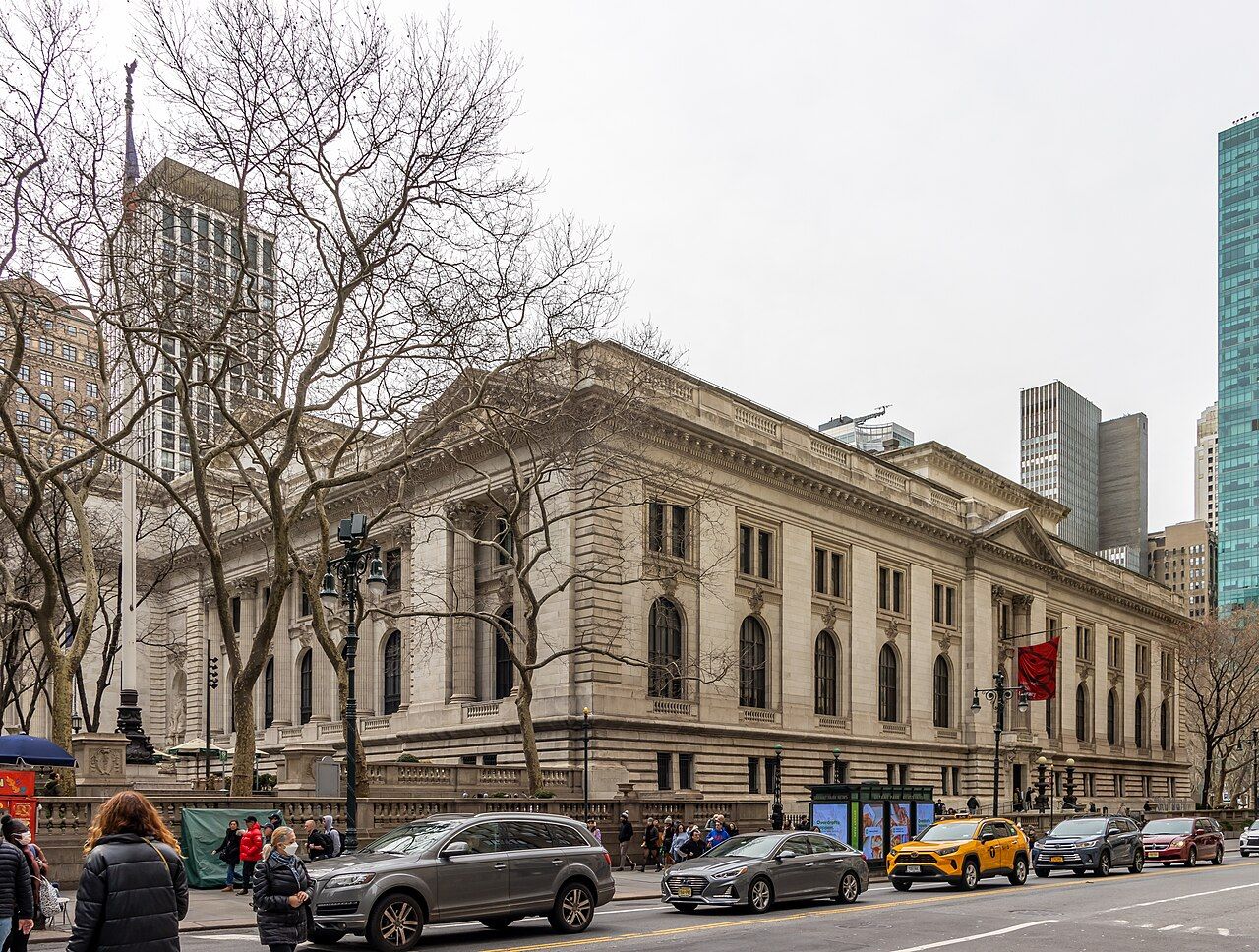
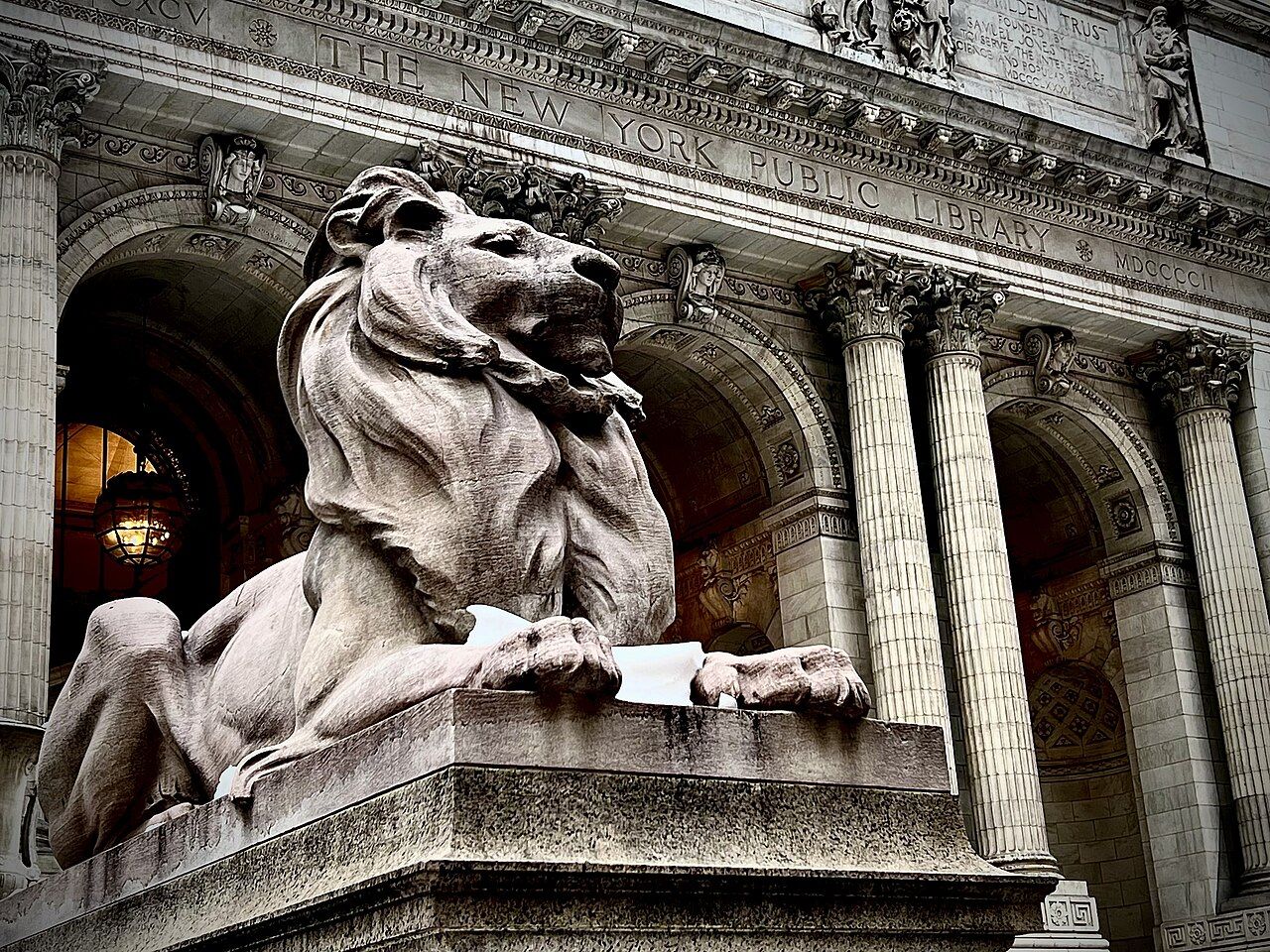
The main building of the New York Public Library fills the block on Fifth Avenue between 40th and 42nd Streets. It opened in 1911, a white marble Beaux-Arts palace built on the site of an old reservoir, and it remains one of the great free public buildings in the world. Two marble lions guard the steps. In the 1930s the mayor, Fiorello La Guardia, named them Patience and Fortitude, the qualities he thought New Yorkers would need to get through the Depression, and the names stuck.
Inside, climb to the third floor for the main reading room, nearly three hundred feet long under a painted sky of clouds, with long oak tables and brass lamps. Anyone may enter, and you can sit and read; the books come up from the stacks below. The building also holds free exhibitions drawn from its collections, and free tours run on most days. Behind the library is Bryant Park, a good place to sit with a book on a warm afternoon. Many of the library's branch buildings across the city were paid for by Andrew Carnegie in the early 1900s, and you will pass several of them on these walks.
Greenwich Village
Take the subway to 14th Street or West 4th Street and walk to Washington Square, with its marble arch at the foot of Fifth Avenue. Henry James was born nearby in 1843 and named a short novel, Washington Square, after the red-brick houses on its north side, several of which still stand. From the square the Village spreads west in a tangle of streets that do not follow the city's grid.
Patchin Place, a tiny gated lane off West 10th Street, was home for some forty years to the poet E. E. Cummings, and the novelist Djuna Barnes lived on the same lane. On Bedford Street, a house only about nine feet wide is often called the narrowest in the city; Edna St. Vincent Millay lived there in the early 1920s. The Jefferson Market branch library on Sixth Avenue, a Victorian Gothic former courthouse with a clock tower, is worth a look inside. Walk slowly: the point of the Village is the streets, the small houses and the sense of how many writers came here when it was cheap.
Harlem and the Schomburg Center
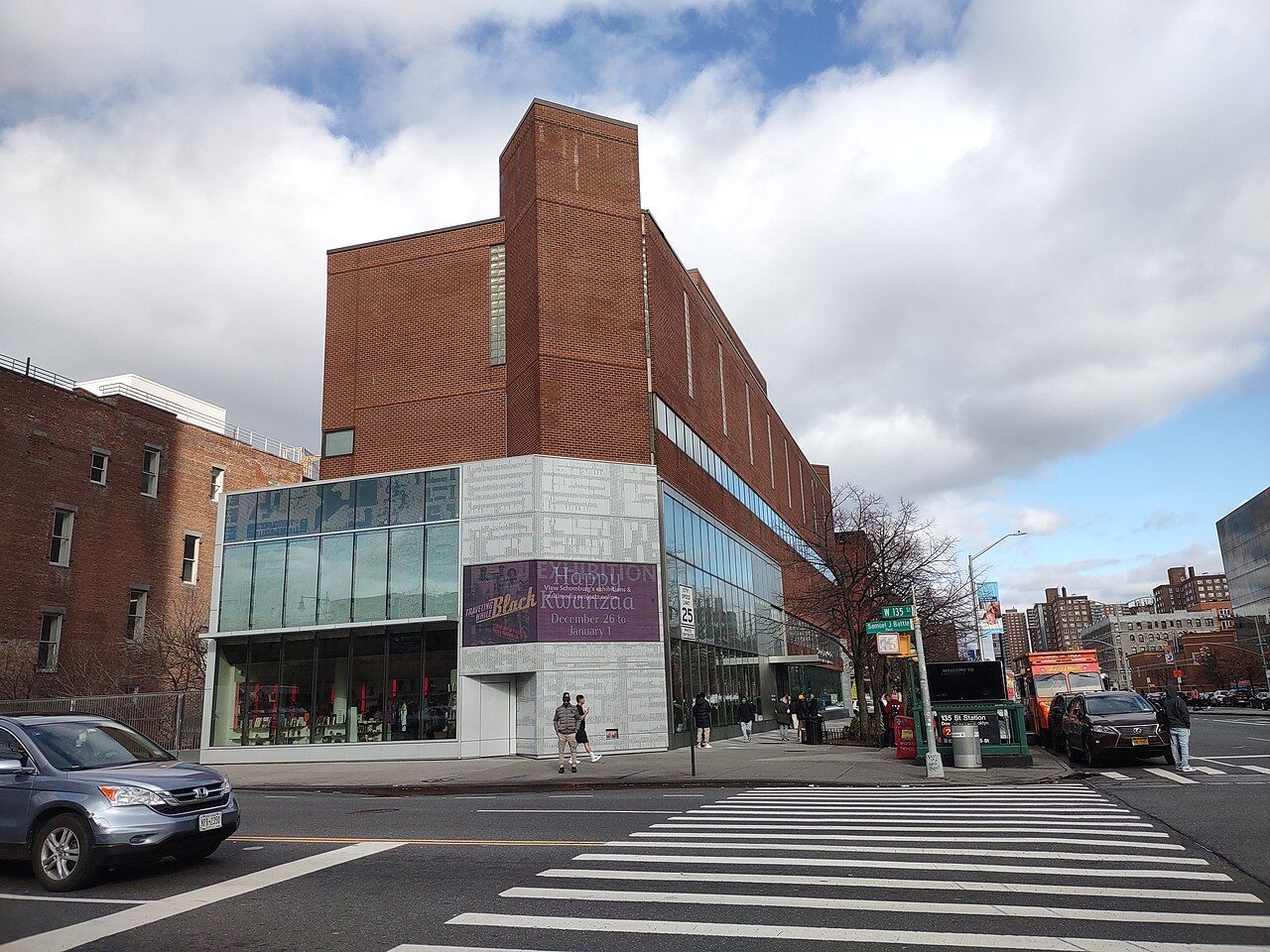
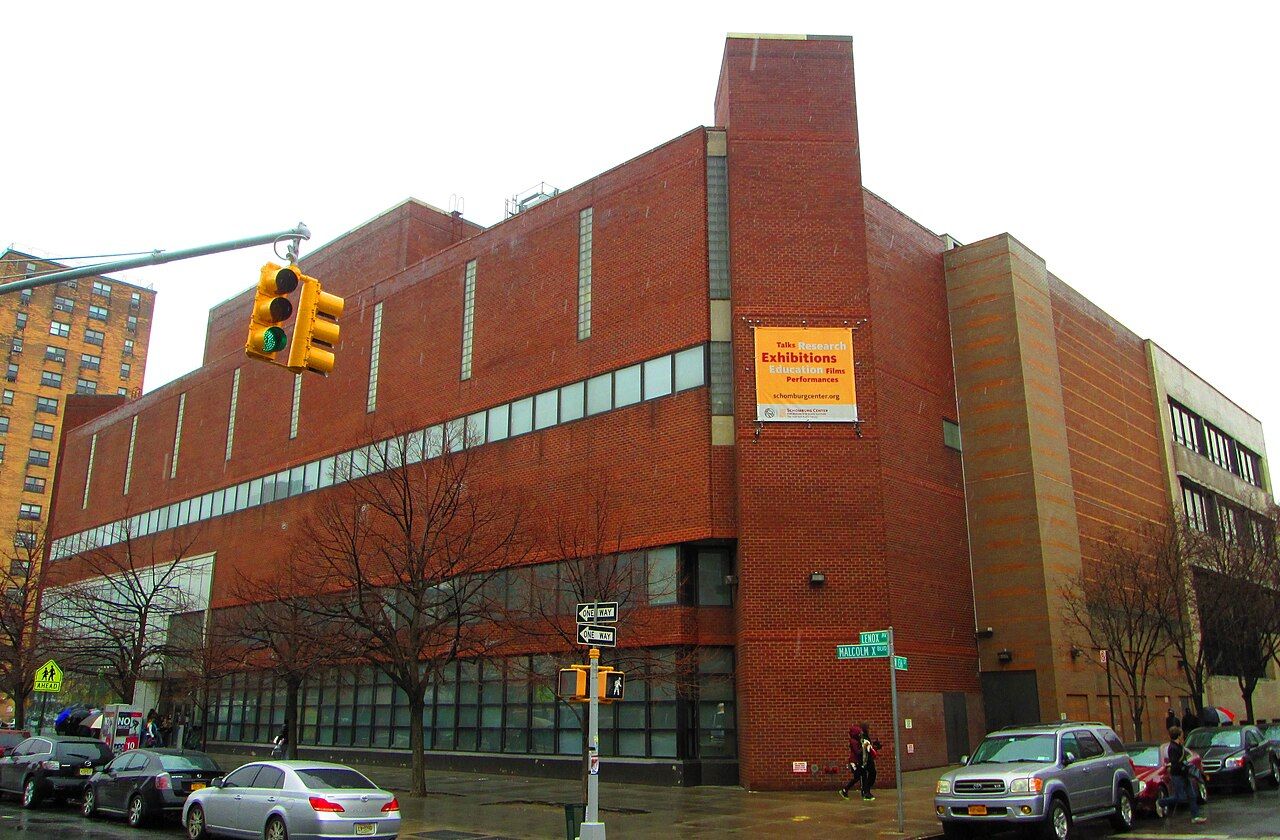
Ride uptown to 135th Street and Malcolm X Boulevard, still often called Lenox Avenue. The Schomburg Center for Research in Black Culture, part of the public library, grew from the collection of Arturo Alfonso Schomburg, a Puerto Rican-born scholar and collector whose books, manuscripts and art the library bought in 1926. It is one of the world's leading research libraries on the African diaspora, and its galleries hold changing exhibitions that are free to visit.
Shelved nearby · NE 007Concord and Walden Pond: one town, five writersIn the 1920s this corner was the heart of the Harlem Renaissance. The writers who gathered at the branch library here included Langston Hughes, Countee Cullen, Zora Neale Hurston and Claude McKay. Hughes's ashes lie beneath the floor of the center's atrium, under an inlaid design inspired by his poem The Negro Speaks of Rivers. His house on East 127th Street, where he lived for the last twenty years of his life, stands a short walk south. James Baldwin was born in Harlem in 1924 and grew up a few blocks from here; his first novel, Go Tell It on the Mountain, is set in these streets.
Harlem also holds a harder history: the Renaissance happened in a neighbourhood shaped by segregation, crowded housing and discrimination in jobs and lending. The center's exhibitions and Hughes's own poems are among the best guides to that history.
Brooklyn Heights
Take the 2 or 3 train to Clark Street and walk to the Brooklyn Heights Promenade, a raised walkway above the expressway that looks across the East River to Lower Manhattan and the Brooklyn Bridge. Walt Whitman lived in Brooklyn for much of his early life and had the first edition of Leaves of Grass printed here in 1855; his poem Crossing Brooklyn Ferry describes the crossing just below.
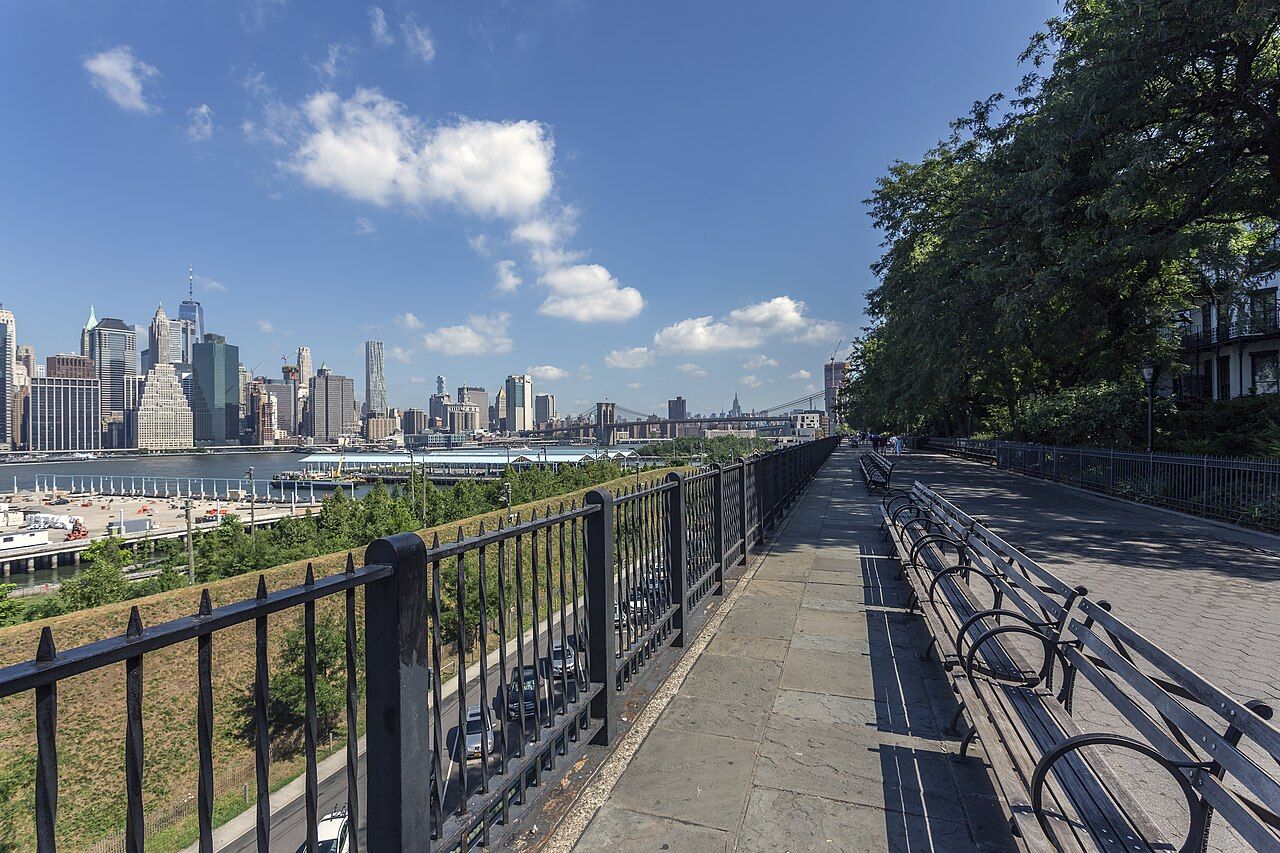
The quiet streets behind the promenade have housed a long line of writers. Hart Crane worked on his long poem The Bridge in a room on Columbia Heights that looked out over the Brooklyn Bridge. Truman Capote lived in a basement apartment on Willow Street in the 1950s. On Middagh Street a house shared in the early 1940s by W. H. Auden, Carson McCullers and others was demolished when the expressway was built. Walk Willow, Pierrepont and Columbia Heights and you will pass houses older than any of them.
At the north end of the promenade, walk down to the water at Fulton Ferry Landing, where the ferry Whitman wrote about once docked. From there you can walk back to Manhattan across the Brooklyn Bridge, finished in 1883, on its raised wooden walkway. The crossing takes about half an hour and gives you the view Crane wrote toward, the towers and cables against the skyline.
Putting the walks together
A sensible order is the Fifth Avenue library in the morning, when the reading room is calm, and the Village in the afternoon. Give Harlem the next morning, when the Schomburg's galleries are open, and Brooklyn Heights the late afternoon, when the light falls on Manhattan across the river. A New York stay sits well beside the Library of Congress in Washington to the south and the reading rooms of Boston to the north. Mark Twain's house in Hartford is about two and a half hours by road, and if you are heading west, literary Chicago makes a fitting next city.
Walk slowly: the point of the Village is the streets, the small houses and the sense of how many writers came here when it was cheap.
Pictures on loan from
- Mike Peel ( ) CC BY-SA 4.0
- John Dillenbeck CC0
- Jim.henderson CC BY-SA 4.0
- Beyond My Ken CC BY-SA 4.0
- Acroterion CC BY-SA 4.0