
The West · Taos
Taos, the mountain light and the writers it pulled west
D. H. Lawrence spent only parts of three years in northern New Mexico, yet his ashes rest above Taos. Around him, painters and novelists found a landscape and a people they had never seen.
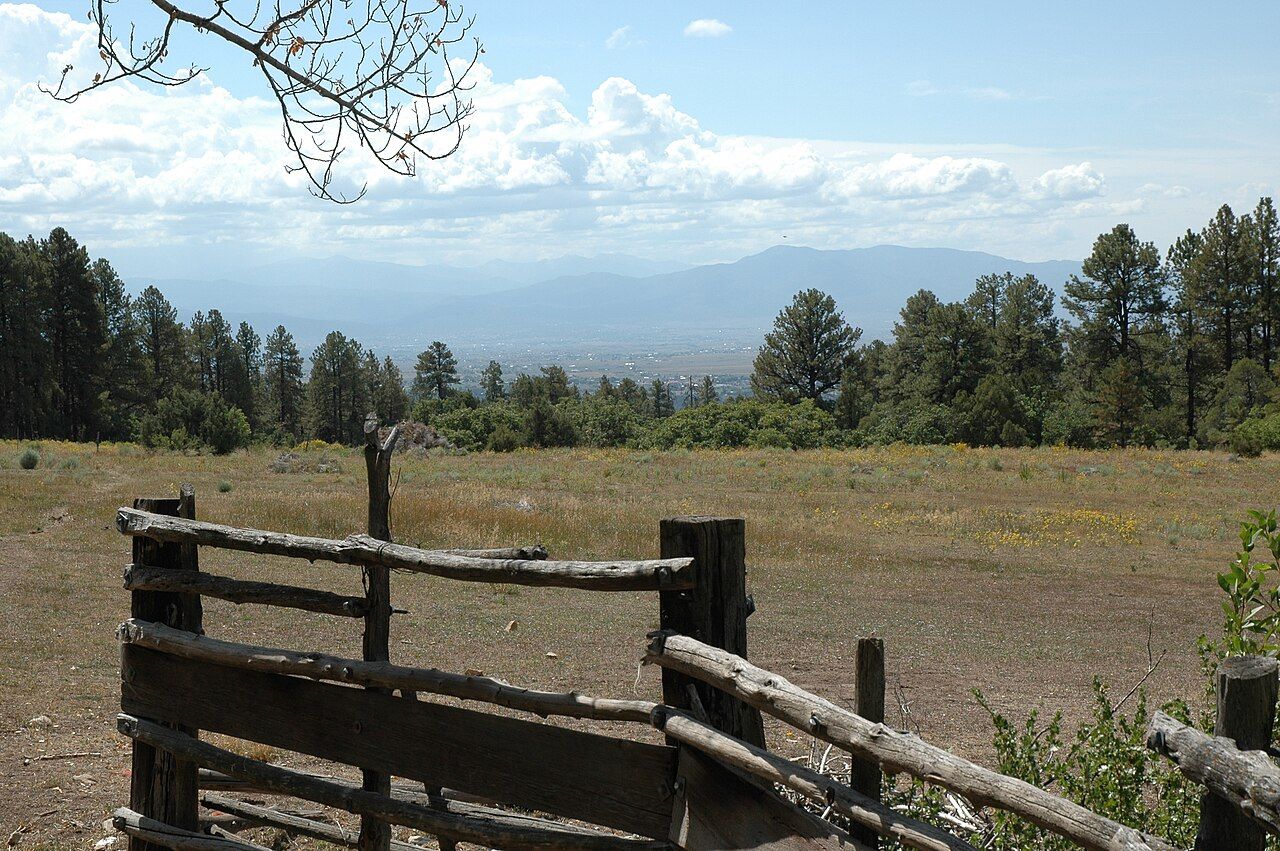
Taos sits at nearly 7,000 feet on a high plateau below the Sangre de Cristo Mountains, with the gorge of the Rio Grande cutting across the plain to the west. Three communities share the valley: Taos Pueblo, home to Tiwa-speaking people for many centuries; the old Spanish town around its plaza; and the art colony that grew up in the early twentieth century, when painters from the East arrived and stayed.
Writers followed the painters. The best known of them is D. H. Lawrence, the English novelist, who came in 1922 and returned in 1924 and 1925. He wrote parts of several books in the region and later called his time in New Mexico one of the great experiences of his life. Willa Cather, who visited the Southwest in the 1910s and 1920s, set Death Comes for the Archbishop (1927) in the territory, and its descriptions of mesas and adobe churches still fit the drive in.
The light and the land
Painters talk about the light here, and you notice it within an hour of arriving: dry air, high altitude and a sky that seems larger than the land beneath it. Afternoon storms build over the mountains in summer, and the low winter sun throws long blue shadows across the snow. Adobe walls change colour through the day.
The Taos Society of Artists, founded in 1915, made the valley known across the country, and the museums in town keep much of their work. For a reader, the point of a visit is to see the place that so many writers tried to put into words, and to notice how often they misread it.
Taos Pueblo
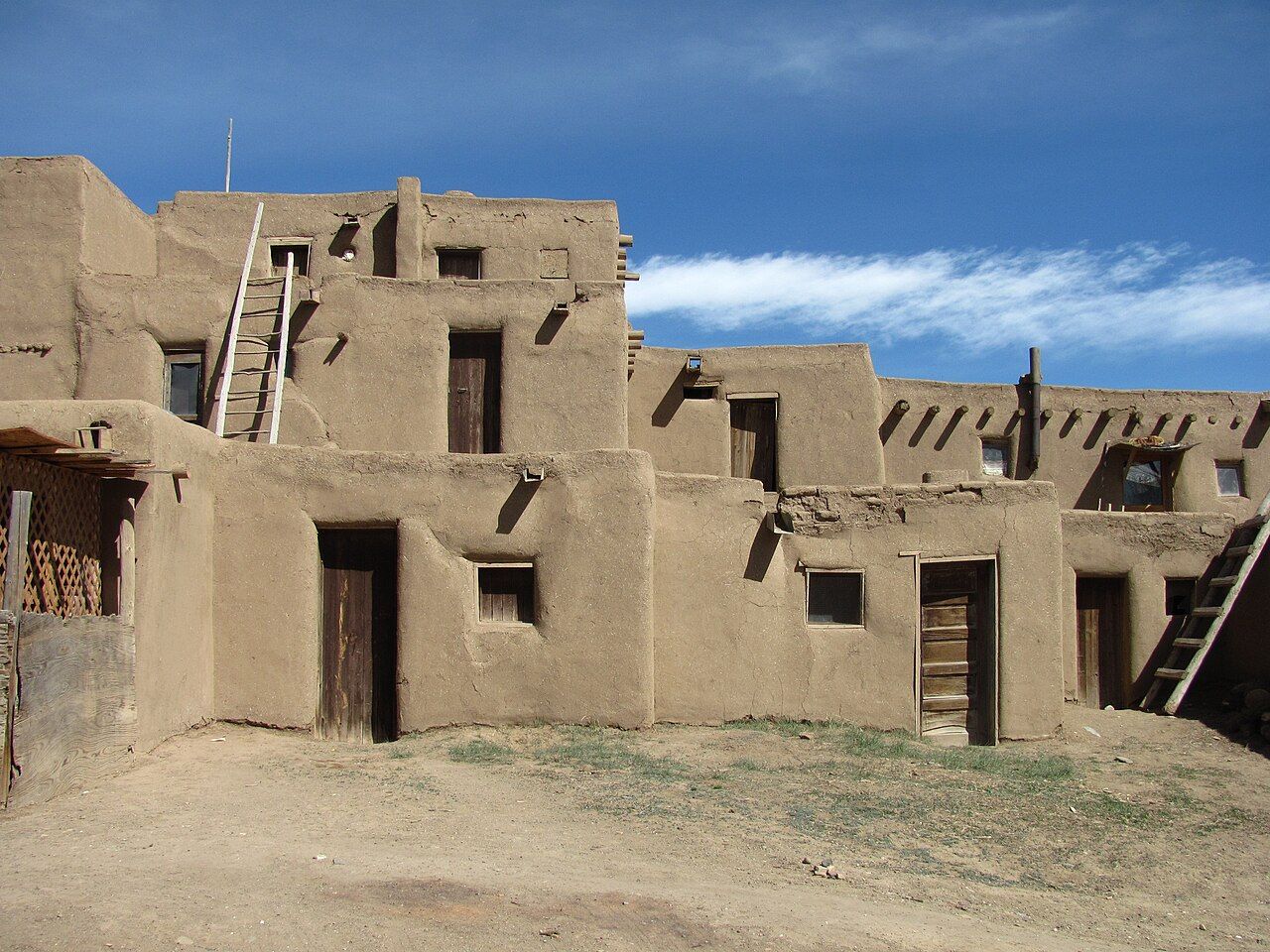
A couple of miles north of the plaza, Taos Pueblo is one of the oldest continuously lived-in communities in the United States. Its two main multi-storey adobe buildings stand on either side of a creek that runs down from the mountains, and the whole pueblo is a UNESCO World Heritage Site. It is a living community, not a museum, and it sets its own rules.
The pueblo opens to visitors on many days but closes for ceremonies and at certain times of year, sometimes for weeks. Fees, photography rules and areas off limits are set by the tribe; ask on arrival and follow them. Some places, including the cemetery, are not to be photographed or entered.
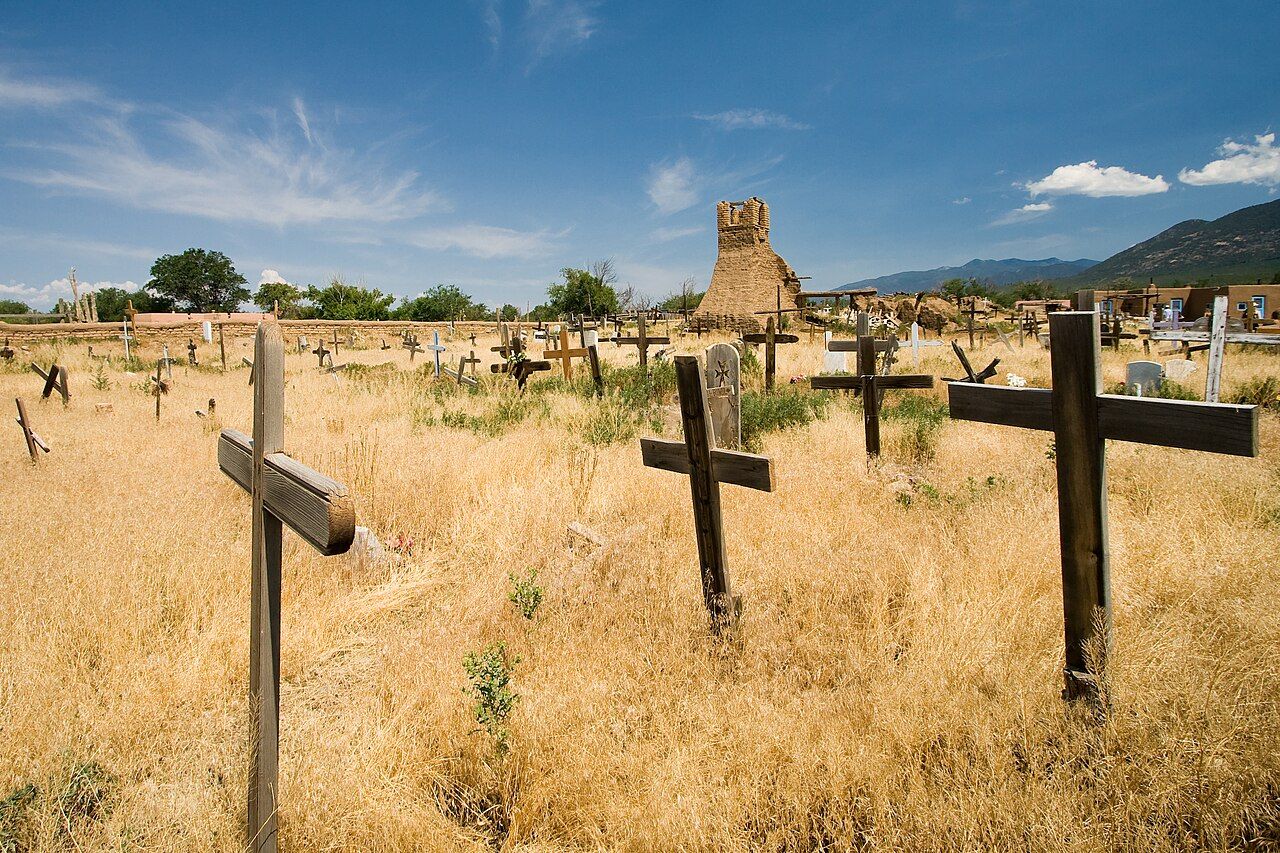
Beside the cemetery stands the ruined tower of the old San Geronimo church, destroyed by United States troops in 1847 during the fighting that followed the American takeover of New Mexico. It is a hard piece of history in plain sight, and it says something about how the region came to be part of the country you are driving through.
Shelved nearby · MW 077Red Cloud and the prairie Willa Cather carried with herLawrence's ranch and memorial
About twenty miles north of town, on a mountainside above the hamlet of San Cristobal, is the ranch where Lawrence lived and wrote. It was given to his wife, Frieda, by the patron Mabel Dodge Luhan, who had drawn the couple to Taos in the first place; in return, she received the manuscript of Sons and Lovers. Lawrence and Frieda spent their summers here, chopping wood, keeping animals and writing in the shade of a large pine.
Lawrence died in France in 1930. Several years later Frieda brought his ashes back and built a small memorial shrine on the hill above the cabins, where it still stands. She is buried at its door. The property later passed to the University of New Mexico, which looks after it.
Access to the ranch has varied over the years, and the road in is unpaved. Check opening days before you go, and if the memorial is open, take the short, steep path up through the trees. The view west across the valley toward the Rio Grande gorge is the one Lawrence saw every day.
Around the valley
Back in town, the plaza and the streets around it hold adobe houses, galleries and museums, some in the former homes of artists. The house Mabel Dodge Luhan built on the edge of town, where Lawrence and many other guests stayed, still stands. South of Taos, the church of San Francisco de Asís at Ranchos de Taos, with its massive buttressed adobe walls, has been painted and photographed more than almost any building in the state.
Other books make good company. Frank Waters's The Man Who Killed the Deer (1942) is set in a pueblo community much like Taos. Rudolfo Anaya's Bless Me, Ultima (1972) belongs to the villages of the eastern plains, and Lawrence's own long story St. Mawr (1925) ends on a ranch very like his.
Planning the drive
- From Santa Fe, the highway north through Española joins NM 68, which follows the Rio Grande to Taos in about an hour and a half; the high road through the mountain villages is slower and worth it.
- Altitude matters. Drink water, take it slowly on the first day, and carry sun protection.
- Late spring and early autumn are usually the most comfortable seasons. Winter brings snow on the passes.
- Check opening days for the Lawrence ranch and visitor days at Taos Pueblo before you set your dates.
Taos makes a natural pairing with the Plains on a long western loop. Cather's Nebraska novels, read alongside her prairie town of Red Cloud, show the same writer turning from grass to stone. Farther west, the Beat poets of San Francisco looked toward the desert for some of the same reasons.
Pictures on loan from
- Vivaverdi CC0
- John Phelan CC BY-SA 3.0
- Luca Galuzzi ( Lucag ) CC BY-SA 2.5