
New England and New York · Amherst, Massachusetts
Emily Dickinson's Amherst
The poet spent almost her whole life in one house on Main Street. In Amherst you can stand in her bedroom, cross the lawn to her brother's house and find her grave.
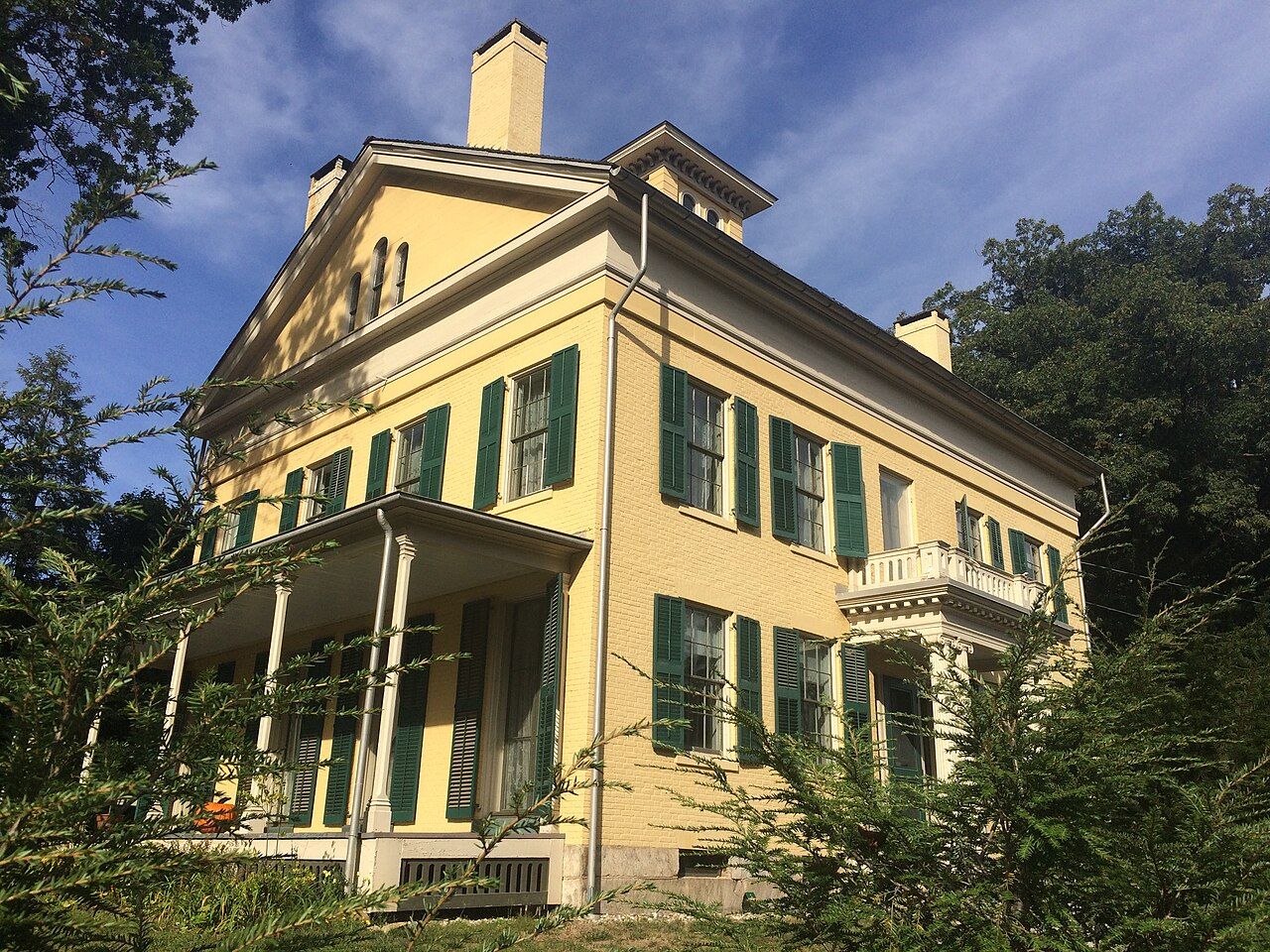
Amherst is a college town in the Pioneer Valley of western Massachusetts, with a green at its centre and the hills of the Holyoke Range to the south. Emily Dickinson was born here in 1830, lived nearly all her life here and died here in 1886. In that time she wrote close to eighteen hundred poems, of which only around ten were printed while she lived, most of them without her name. The houses where she wrote and where her brother lived are now a single museum on Main Street, a short walk east of the town centre.
The house on Main Street
The Homestead, a brick house built around 1813, belonged to her grandfather, Samuel Fowler Dickinson, one of the founders of Amherst College. Emily was born in it. When she was nine the family moved to another house in town, and in 1855 her father, Edward Dickinson, a lawyer, college treasurer and for one term a member of Congress, bought the Homestead back. Emily lived there from then until her death.
She was not a recluse from the start. She went to Amherst Academy and spent a year at Mount Holyoke Female Seminary in South Hadley, and as a young woman she went to parties and travelled to Boston, Washington and Philadelphia. From her thirties on she left the house and its grounds less and less, and in later years she often spoke to visitors from another room or from behind a half-open door. Why she chose this is not known, and the museum does not pretend to know. What is clear is that she kept up a large correspondence, read widely and followed the town's life closely from her window.
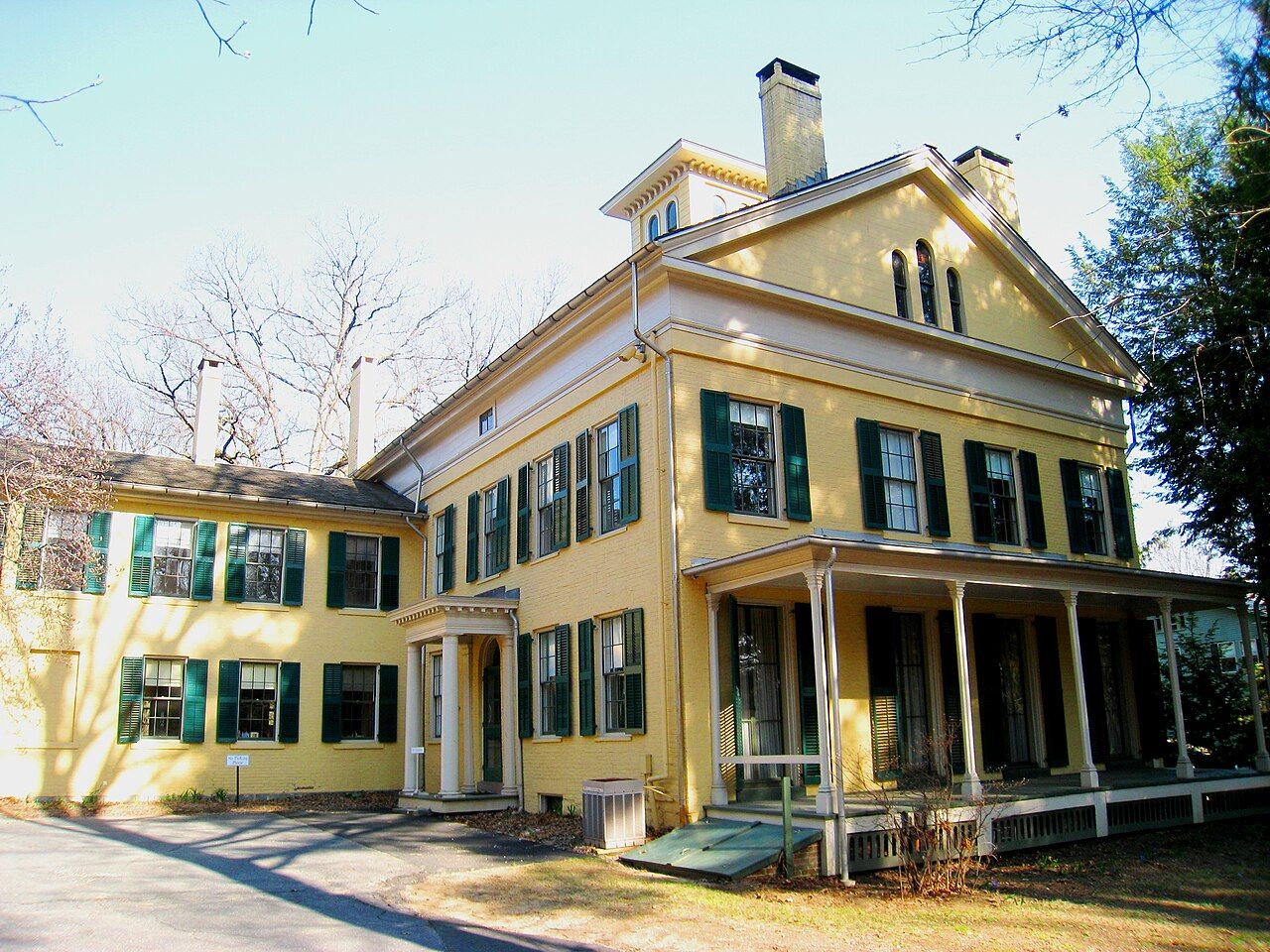
Inside the Homestead
Tours take you through the family rooms and up to her corner bedroom, which looks out over Main Street and toward the Evergreens. The room has been restored with period wallpaper, a reproduction of her small writing table and her sleigh bed. A reproduction of her white dress hangs here too; the original is kept by the town's historical society. It is a small, bright room, and it is hard to stand in it without thinking of how much work came out of it.
Look out for the garden. She was a serious gardener and kept a conservatory off the house, and as a girl she made a herbarium of hundreds of pressed plants, each labelled in her hand. The museum has replanted parts of the grounds, and in late spring and summer the flower beds and the orchard give you a sense of what she saw when she looked out.
Shelved nearby · LB 112Boston Public Library, a palace that is free to allThe Evergreens across the lawn
A path across the lawn leads to the Evergreens, an Italianate house her father built in 1856 for her brother Austin and his wife, Susan Huntington Gilbert Dickinson. Susan was one of Emily's closest friends and readers, and Emily sent her hundreds of letters and poems over the years. The Evergreens stayed in the family until the late twentieth century, and its rooms still hold much of the furniture, books and pictures the family left, which makes it one of the more unusual house interiors in New England.
The house also holds the less comfortable side of the family story. Austin's long affair with Mabel Loomis Todd, the wife of an Amherst College professor, split the two households. Todd later co-edited the first collections of Emily's poems, published from 1890 onward after her sister Lavinia found the manuscripts in a locked box, and the rival claims to the poems between the two sides of the family went on for decades. The museum tells this plainly.
The town she watched
Walk west along Main Street to the town common and the old centre. Amherst College, which her grandfather helped found and her father served, rises on the hill to the south; the poet Robert Frost taught there on and off for many years. The Jones Library, the town's public library, keeps special collections on both Dickinson and Frost and is worth a stop if you want to see early editions.
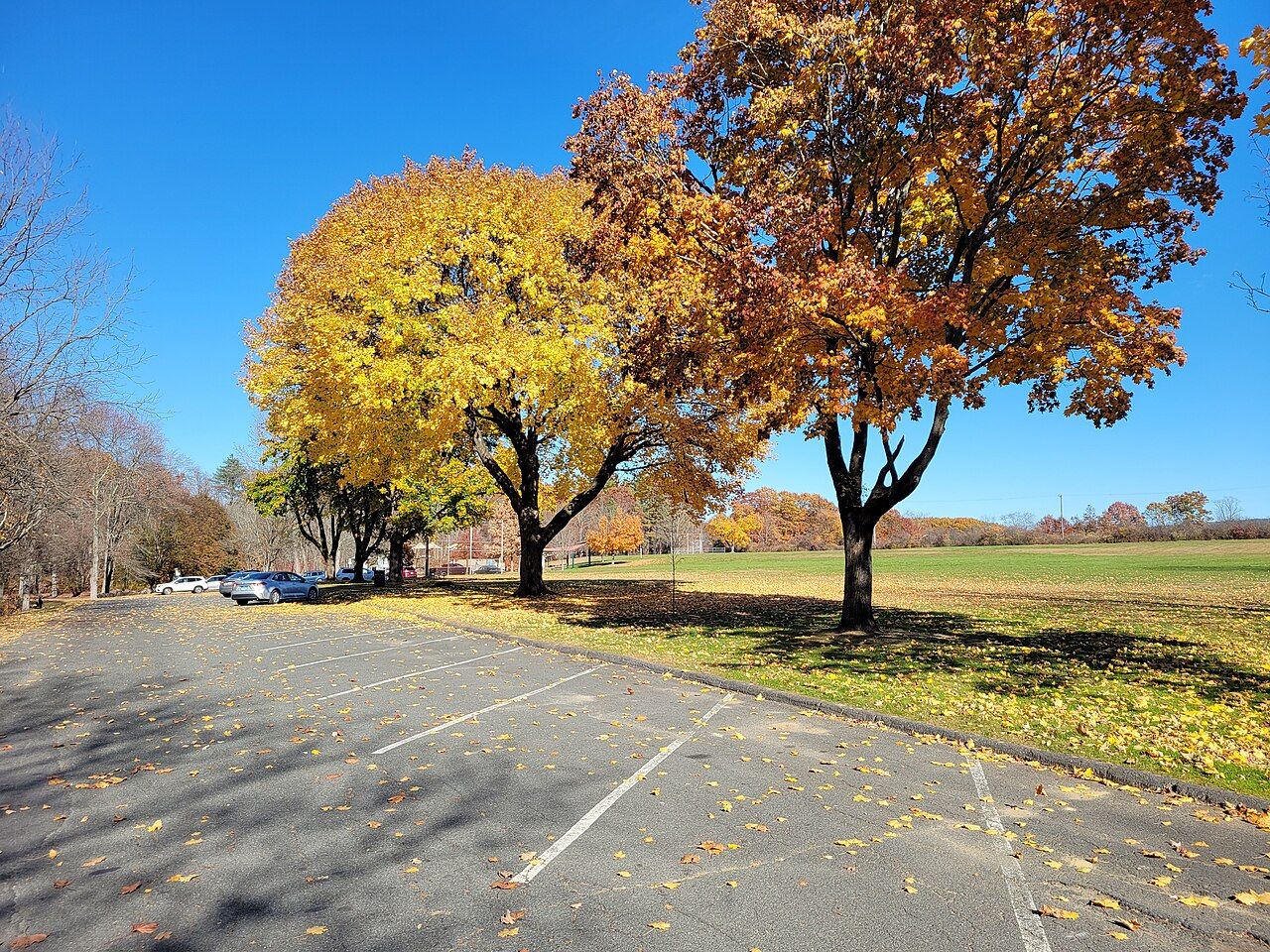
Beyond the centre the town opens quickly into fields, woods and river meadows. A drive or a walk along the Fort River or through one of the town's parks in October, when the maples turn, gives you some of the country she wrote about from her window: robins, snakes in the grass, the slant of winter light.
West Cemetery and planning a visit
Emily Dickinson is buried in West Cemetery on Triangle Street, a few minutes' walk from the Homestead, inside the family plot behind an iron fence. Her stone carries the words Called Back, from one of her last letters. Visitors leave pencils, stones and folded poems.
The museum's tours are small and fill up, especially on autumn weekends, so book ahead and check which days it is open. Allow about two hours for the houses and grounds and another hour for the cemetery and the town. Amherst works well as part of a New England loop: Concord is about ninety minutes east, and Hartford about an hour south. Our guide to planning a wider loop has ideas for linking them.
Pictures on loan from
- Babbage CC BY-SA 4.0
- Daderot Public domain
- John Phelan CC BY 4.0
