
Great libraries · Seattle
Two Pacific Northwest libraries, one road between them
Seattle and Portland are a few hours apart on Interstate 5, and each has a central library worth the trip: one a twenty-first-century glass experiment, the other a restored brick classic.
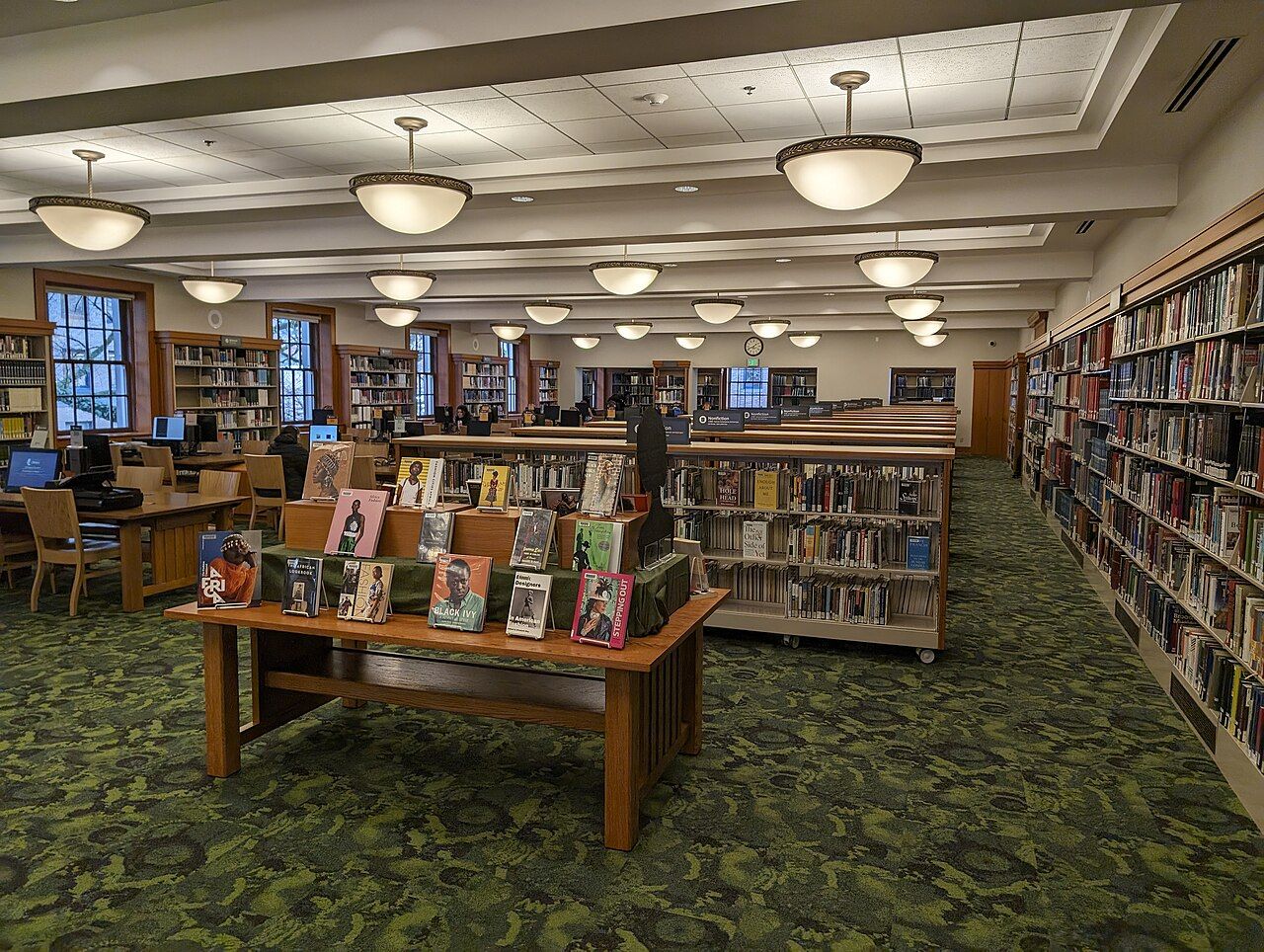
The Pacific Northwest has long been a region of readers. Its long, grey winters keep people indoors, its cities have strong public libraries, and its writers range from the poets of the University of Washington to the children's books of Portland. A drive between Seattle and Portland on Interstate 5 takes three hours or so without traffic, which makes the two central libraries an easy pairing for a long weekend.
The two buildings could hardly be more different. Seattle's is a bold glass and steel structure opened in the twenty-first century. Portland's is an elegant brick and stone library from before the First World War, recently renovated. Seeing both tells you a good deal about how ideas of a public library have changed.
Seattle Central Library
The Seattle Central Library opened downtown in 2004. From outside it looks like a stack of glass boxes, shifted and tilted, held in a diamond-shaped steel net. Inside, the floors are arranged around what the library needed to do, rather than a single grand room.
The Living Room, a vast open floor under a sloping glass wall, is a public reading space with long views and soft chairs. Higher up, the Books Spiral carries the non-fiction collection up several floors along a continuous ramp, so the shelves run in one unbroken sequence instead of being split between levels. On another floor, a corridor of meeting rooms is painted entirely in deep red, a startling sight when you step off the escalator.
Ride to the top reading room for the view over downtown and Elliott Bay. The building divides opinion, and it is meant to: take your time and decide for yourself.
The building is also a working public library first. Its lower floors hold children's books, a large collection in languages other than English and rows of public computers, and on a weekday you will share the escalators with students, job seekers and families.
Seattle's branches and writers
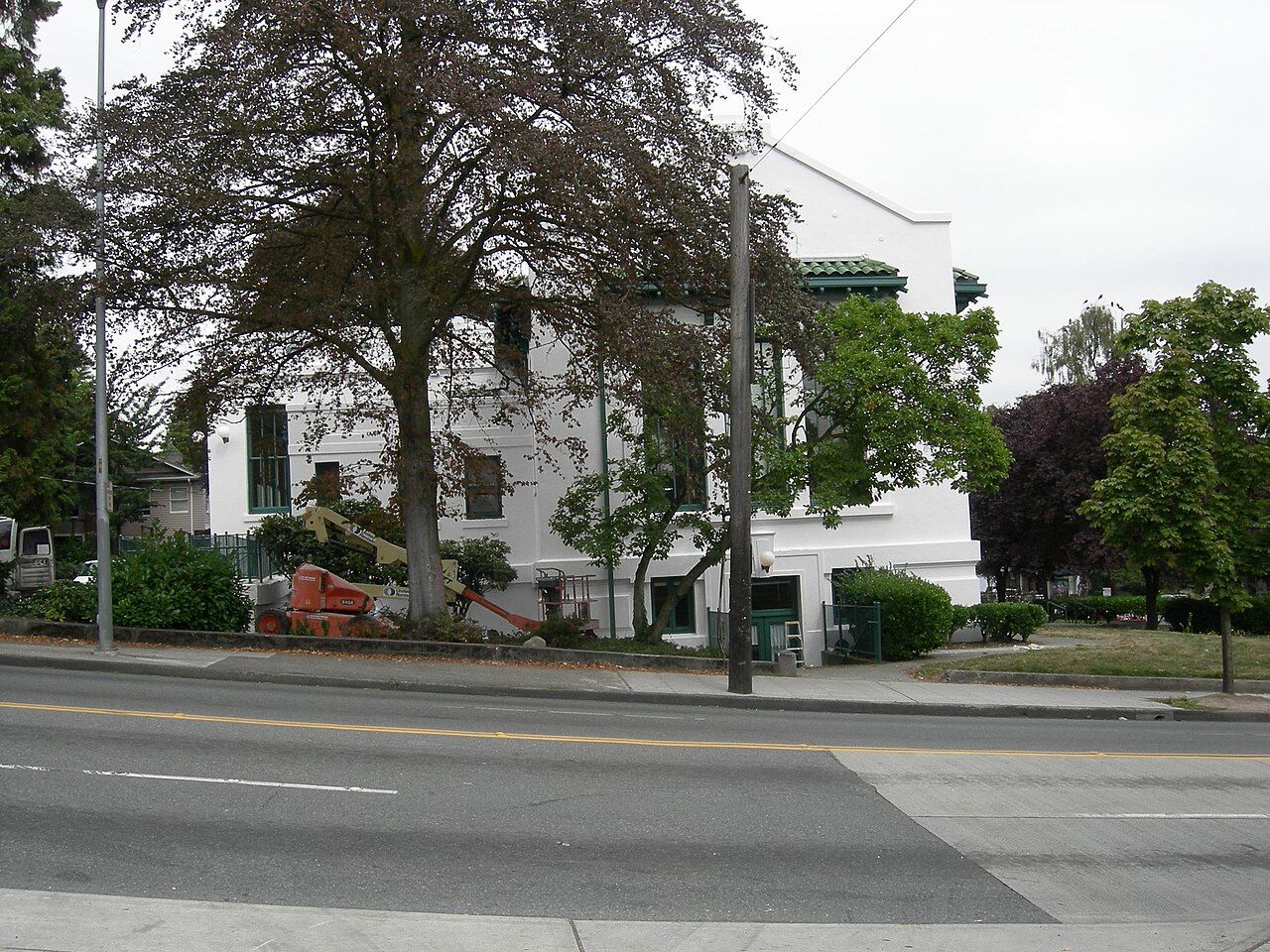
Seattle's branch libraries are worth a look as well. Several are early twentieth-century buildings paid for in part by the steel magnate Andrew Carnegie, whose grants built libraries across the country. The University Branch, near the University of Washington, is one of them, a white building with a green tile roof that is listed on the National Register of Historic Places.
The university gave the city much of its literary life. The poet Theodore Roethke taught there from the late 1940s until his death in 1963, and his student Richard Hugo went on to write some of the best poems about the small towns of the Northwest. Raymond Carver spent his last years on the Olympic Peninsula, across the water.
Shelved nearby · LB 112Boston Public Library, a palace that is free to allPortland's Central Library
Portland's Central Library, run by Multnomah County, opened in 1913 in a building designed by the local architect A. E. Doyle. It fills a city block downtown, a handsome Georgian-style structure of brick and stone with tall windows and a grand central stair. The names of writers and thinkers are carved around the outside, a tradition it shares with the Boston Public Library.
The library closed for renovations and reopened in 2024. Inside, the reading rooms are light and quiet, with wooden shelving, decorated ceilings and long tables. Ask about the children's library, named for Beverly Cleary, who grew up in Portland and set her Ramona and Henry Huggins books in the streets of its northeast neighbourhoods.
A short drive from downtown, Grant Park holds bronze statues of Ramona Quimby, Henry Huggins and his dog Ribsy, an easy stop with children. Klickitat Street, which Cleary's characters live on, is nearby.
Halfway between the cities, Olympia, Washington's state capital, makes an easy break in the drive, with a domed capitol on a hill above the southern end of Puget Sound. On a clear day the snowy cone of Mount Rainier shows to the east of the interstate for much of the way south from Seattle.
A city of readers
Portland is known for its reading habit. A bookshop that takes up a city block sits a few streets from the library, and smaller neighbourhood libraries and reading rooms are scattered through the city. Ursula K. Le Guin lived in Portland for most of her adult life and set The Lathe of Heaven (1971) in a future version of the city, rain and all. Ken Kesey, though more tied to the country around Eugene, wrote about the logging rivers of Oregon in Sometimes a Great Notion (1964).
Visit on a weekday and you will find the libraries full of students, retirees and people using the computers and the warmth. That, rather than the architecture, is what a public library is for, and both cities do it well.
Planning the trip
- Both libraries are free to enter. Hours vary by day, so check before you go.
- Interstate 5 links the two cities; the Amtrak Cascades train is a relaxing alternative and drops you near both downtowns.
- Summer is usually the driest season. From October to April expect rain and bring a jacket.
- Parking downtown in both cities is costly; use public transport where you can.
If you are driving south from here toward California, the next literary stop is San Francisco's North Beach, a long day's drive down Interstate 5 and through the valley.
Pictures on loan from
- Simon Tsu CC BY-SA 4.0
- Joe Mabel CC BY-SA 3.0